Sash windows rule out most standard secondary glazing products before specification even begins. Their vertical sliding operation, spring-balance mechanism, and the internal mounting hardware within the box frame all need a secondary system built around that specific operation, not a generic product adapted to fit. The Balanced Vertical Slider is the product Granada engineered for exactly this problem, and getting the variant and glass specification right is what determines whether the finished result performs the way the drawing said it would.
Why Sash Windows Need a Dedicated Product
Granada’s Horizontal Sliding system, the most popular product across the range for casement and hinged windows, is explicitly unsuitable for sash window applications. The two-panel to five-panel sliding sashes and brass roller mechanism that make Horizontal Sliding work for casement windows have no equivalent in a traditional sash box frame, where the primary window itself already occupies the vertical sliding motion the secondary glazing would otherwise need to replicate independently.
The Balanced Vertical Slider (BVS) solves this with a spring-balance mechanism of its own, mirroring the operating principle of the sash window it sits behind rather than working against it. Each pane can be held at any chosen position, matching the ventilation flexibility a working sash window offers.
The Three BVS Variants
Granada manufactures three variants of the Balanced Vertical Slider, distinguished by how much access they provide to the primary sash window behind them.
Standard BVS provides the core spring-balance sliding function, at sizes up to 1,575mm wide and 3,325mm tall, with a maximum weight of 45kg per unit. This is the correct specification where periodic access to the primary sash for cleaning or maintenance isn’t a frequent requirement.
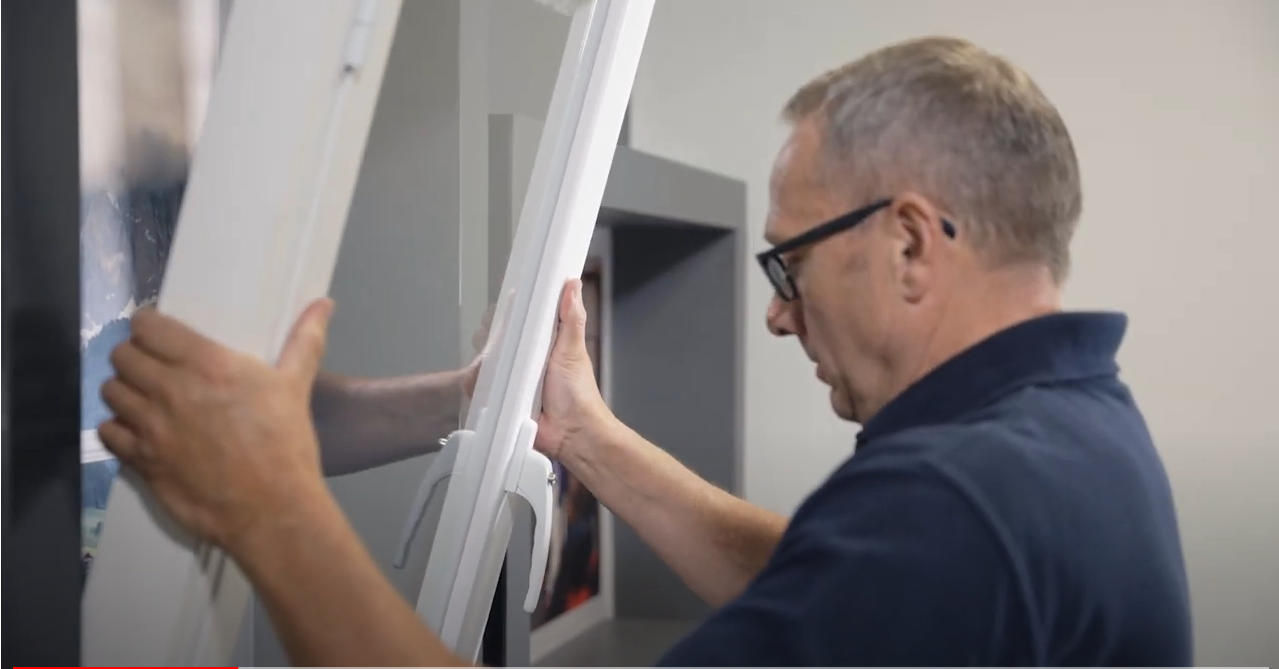
Tilt-In BVS (TBVS) adds a tilt-in facility, allowing each sash to pivot inward up to 180 degrees, giving full access to both sides of the glass for cleaning without removing the unit. TBVS sizes run slightly smaller than standard BVS, up to 1,568mm wide and 3,025mm tall, reflecting the additional hardware the tilt mechanism requires.
Slide-Past BVS (SPBVS) allows both panels to slide fully past each other, giving unrestricted access to the primary window and the reveal beyond it. This variant matches the standard BVS dimensions of 1,575mm by 3,325mm and suits applications where full, unobstructed access is needed regularly, such as commercial settings requiring frequent maintenance access.
Selecting between the three comes down to how often the primary sash needs direct access. Where access is rare, standard BVS keeps the specification simplest. Where cleaning or maintenance is routine, TBVS or SPBVS avoid the alternative of removing the entire secondary unit each time.
Glass Specification for Sash Window Applications
Glass options for the Balanced Vertical Slider split between the Classic and Enhanced ranges, with meaningful differences in what each supports, set out in full in our glass types guide.
Classic glass is limited to 4.0mm toughened, with a maximum panel weight of 15kg, maximum panel area of 1.5m², and an aspect ratio no greater than 1.5:1. These limits reflect the demands the spring-balance mechanism places on panel weight, since a heavier pane changes the balance calibration the mechanism depends on.
Enhanced glass extends the options up to 10.8mm laminate, with a maximum weight of 45kg and maximum area up to 2.7m², making acoustic laminate and thicker specifications achievable within the BVS format. Woolpile and Q-Lon seals are integrated into the panel groove across the range, contributing to both acoustic and thermal performance at the point where the sliding panel meets its track.
For acoustic-priority sash window applications, 6.4mm to 8.8mm acoustic laminate within the Enhanced range delivers meaningful noise reduction while staying within the weight limits the spring-balance mechanism can accommodate. For thermal-priority applications, Low-E glass at 4mm to 6.4mm pairs with the same mechanism.
Case Precedent: BVS on Heritage Sash Windows
Bishopthorpe Palace in York, the Grade I listed Archbishop of York’s Palace dating from the 13th century, was specified with the Balanced Vertical Slider across two installation phases, improving thermal performance while respecting the building’s Grade I listed status. Porchester Court, the Grade II listed Victorian terrace conversion in London’s Bayswater Conservation Area, combined BVS with 2-panel and 3-panel Horizontal Sliding units across its 36 apartments, achieving 54dB noise reduction and 65% thermal improvement with zero snagging reported.
A residential project on Shipton Road, York, a 1920s semi-detached property, specified five Vertical Sliding units alongside two Hinged units, using 6mm toughened glass as the general specification and 6.8mm acoustic laminate specifically in the road-facing bedroom, an example of specifying different glass thicknesses within the same project based on which rooms face the noise source, the same principle covered in our air gap guide. The result eliminated traffic noise in the affected rooms and reduced the property’s heating requirement.
Suitability Beyond Standard Rectangular Sash Windows
The Balanced Vertical Slider is not limited to standard rectangular sash openings. Granada manufactures BVS units for arched, shaped, bay, and splayed reveal applications, common in period properties where the sash windows themselves were built to an individual design rather than a standard pattern. Bay windows containing sash primary glazing, in particular, require the BVS to be specified per pane with bevelled junction detailing connecting each unit to its neighbours.
Frequently Asked Questions
Can the Balanced Vertical Slider be fitted to any sash window? BVS is designed for traditional sash window applications generally, including arched, shaped, bay, and splayed reveal configurations, though a site survey confirms size and weight suitability for a specific window before specification is finalised.
What is the difference between TBVS and SPBVS? TBVS allows each sash to tilt inward up to 180 degrees for cleaning access. SPBVS allows both panels to slide fully past each other for complete, unrestricted access to the primary window. The choice depends on how much access is needed and how often.
Can acoustic laminate glass be used with the Balanced Vertical Slider? Yes, within the Enhanced glass range, which supports laminate glass up to 10.8mm, though the spring-balance mechanism’s weight limits (up to 45kg for Enhanced) apply to the finished panel.
Why can’t Horizontal Sliding be used on sash windows instead of BVS? Horizontal Sliding is explicitly unsuitable for sash window applications, since its sliding mechanism doesn’t correspond to the vertical sliding operation of a sash box frame. The Balanced Vertical Slider’s spring-balance mechanism is engineered specifically for this operation.
Does the Balanced Vertical Slider affect Listed Building Consent applications for sash windows? Generally not, since BVS is fitted independently of the primary sash window and does not alter its operation, appearance, or historic fabric, which typically satisfies the reversibility criteria that support Listed Building Consent applications for secondary glazing.
Specifying secondary glazing for sash windows on a heritage or residential project? Talk to our team or explore the full Vertical Sliding specification and glass options.